So you want to swap the grey commute for sunshine, tapas and a job that travels. Good call. Spain is one of the best places in the world to teach English, and the life that comes with it is exactly as good as it looks on your feed.
Here's the honest part: it's very doable, but there are a few things you need to get right, and the order matters. This guide walks you through the whole thing, no fluff. If you'd rather get a personalised answer in 60 seconds, take the free eligibility check and we'll map your exact route.

Can you actually teach English in Spain?
Almost certainly, yes. Two myths put people off before they start, so let's kill them both:
- You don't have to be a native speaker. You need to speak and write English to a high standard, that's it. Around 1 in 5 of the teachers we train aren't native speakers.
- You don't strictly need a university degree. A degree helps and opens a few extra doors, but solid life or work experience counts too. What every employer does want is a recognised teaching certificate.
So the real checklist is short: the right to be in Spain, and a qualification that proves you can teach. We'll take those one at a time.
Do you need a visa?
This is the single biggest factor, and the answer comes down to your passport.
EU or EEA citizens: no visa, no drama. You can live and work in Spain freely. Skip to getting qualified.
Everyone else (UK, USA, and beyond): you'll need a visa. A tourist visa is fine for a short stay or a one-month course, but anything past three months and you need the proper paperwork.
The cleanest, most popular route is the student visa. You enrol on a long course (at least 20 hours a week, running 7 to 12 months), which entitles you to live in Spain. A few things to know, because the rules tightened in 2025:
- The school has to be Instituto Cervantes accredited, and its accreditation number goes on your acceptance letter.
- You apply from your home country, at a Spanish consulate. You can't arrive as a tourist and switch over once you're here.
- You'll need to show funds of roughly €600 a month for your stay.
It sounds like a lot, but it's a well-worn path and the part we handle most often. The rules genuinely do change, so it pays to get current advice rather than a forum post from 2019.
Not sure which route is yours?
Answer four quick questions about your passport and situation, and we'll tell you the exact visa route that works for you, plus what to do next.
Take the free check →What qualification do you need?
The qualification that opens doors is an accredited course of at least 160 hours that includes real, observed teaching practice. Watch out for cheap online-only certificates with no teaching practice, employers see straight through them.
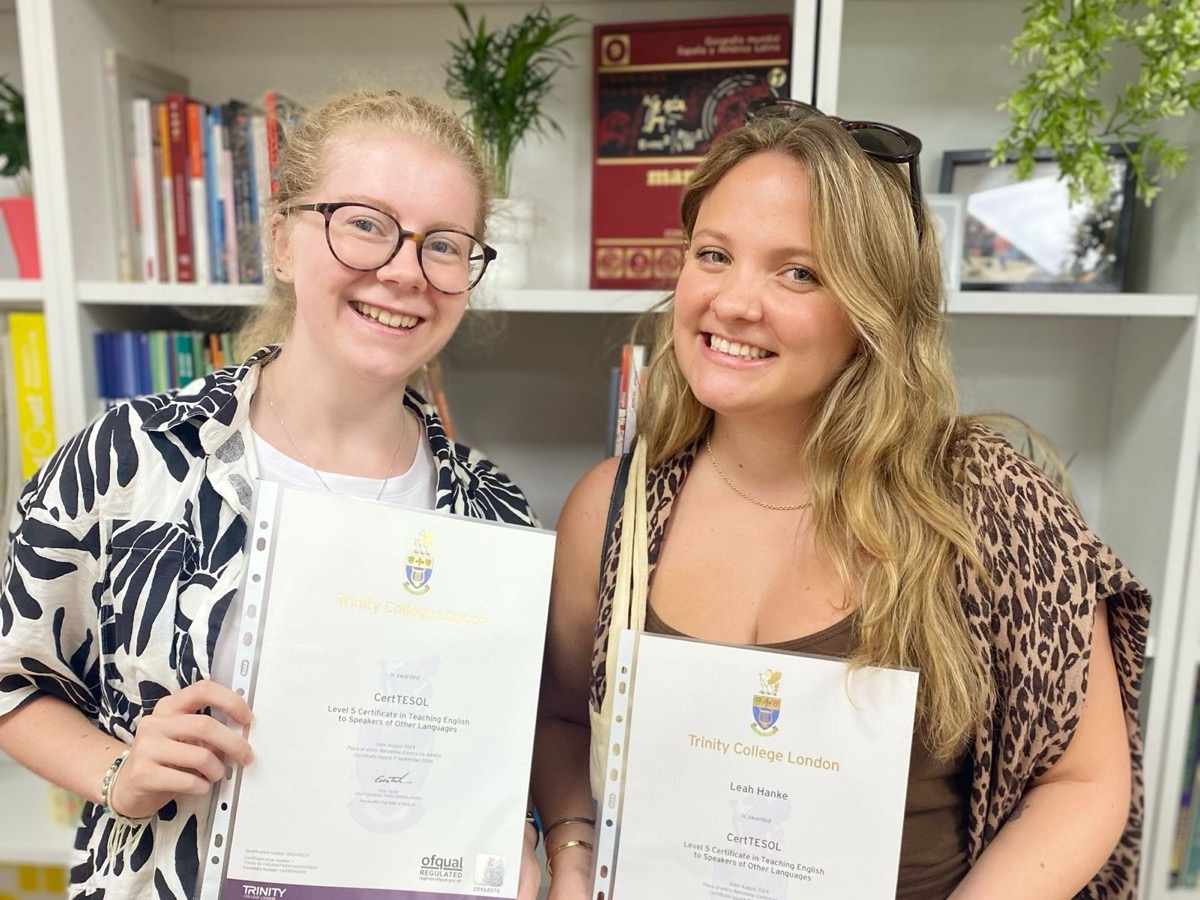
The two gold-standard options are the Trinity CertTESOL and the Cambridge CELTA. People agonise over the choice, but here's the truth: they are equivalent. Both are regulated at the same level, both are recognised worldwide, and no employer will favour one over the other. Pick the course with the better teacher, the better job support and the city you want to be in.
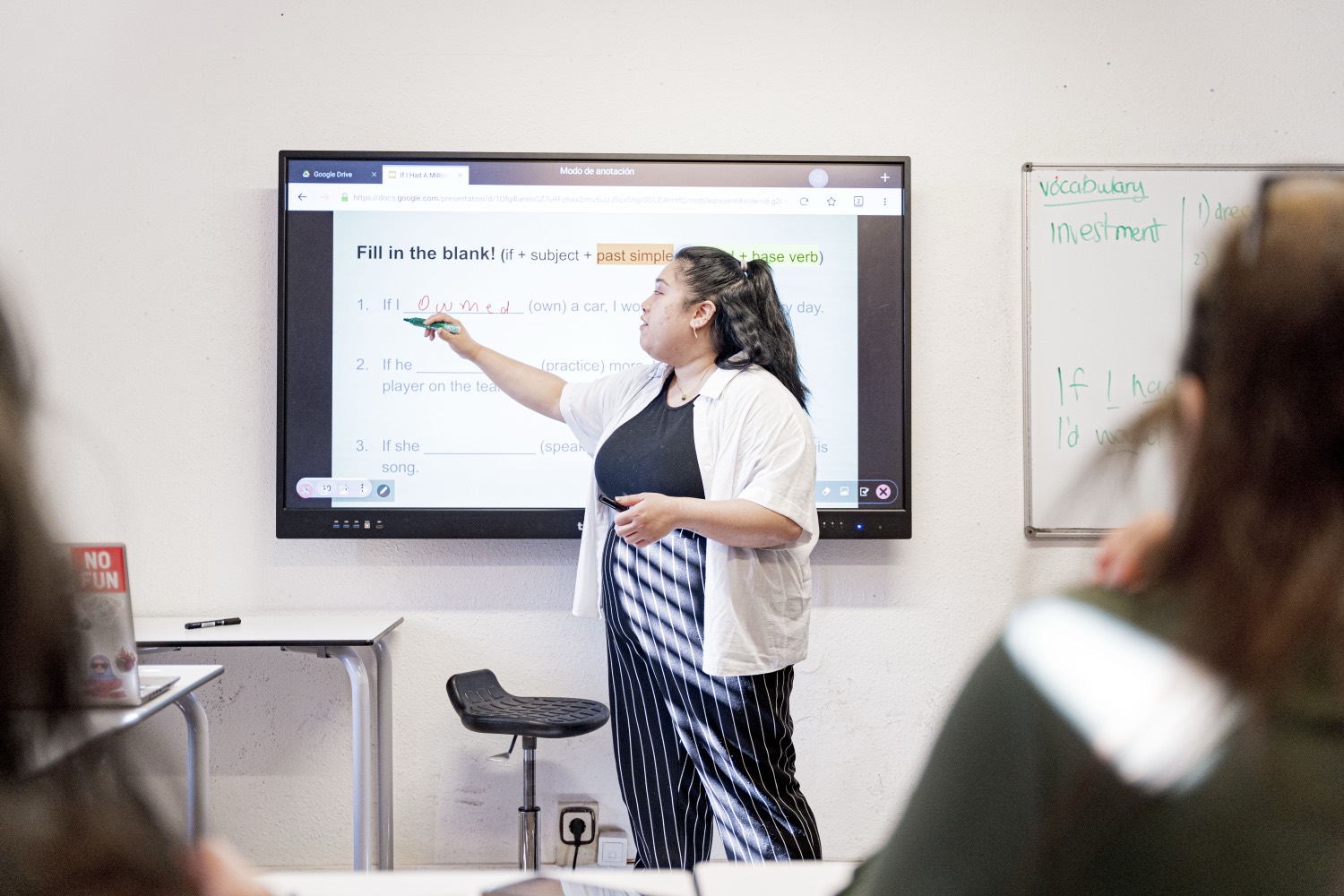
We run the Trinity CertTESOL in Barcelona, four weeks full-time, with six-plus hours of teaching real students and hands-on help finding work afterwards.
What will you earn?
Let's be straight: you won't get rich, but you'll live well. New teachers earn around €1,500 a month, and the smart move is to build that from a few sources rather than one job:
- Hours at a private language academy (your bread and butter to start)
- In-company business English classes, which pay well
- Private one-to-one students, easy to find once you know how
- Online teaching to top up around your timetable
The magic is that €1,500 stretches a lot further in Spain than the same money would back home, which brings us to the next bit.
What does it cost to live there?
Less than you think. Barcelona is dramatically cheaper than London or New York, and most of Spain is cheaper still. A room in a shared city-centre flat in Barcelona runs around €569 a month, against well over €1,200 in London. Eating out, coffee, transport and a beer in the sun all cost a fraction of what you're used to.
Put simply: a new teacher's salary covers a genuinely good life here, with money left for the weekends away that made you want to move in the first place.
Where should you teach?
Every city has its own feel and its own job market. The big four:
- Barcelona, the biggest expat teaching scene, with over 100 language academies and the beach-and-mountains lifestyle.
- Madrid, the most teaching jobs in the country and a buzzing, very Spanish capital.
- Valencia, beaches, paella and fast-growing demand at a lower cost than Barcelona.
- Seville and the south, affordable, sunny and full of character.
Have a look at the city guides to find your fit.
The main routes in
There's more than one way to start. Pick the one that matches your passport and how fast you want to go:
- Get qualified and find work. The flexible, best-paid route. Train, then teach in academies, in companies and privately. Open to everyone, and for non-EU teachers it pairs naturally with the student-visa route above.
- Language assistant programmes. Government-run schemes place you in a Spanish school as a conversation assistant. The hours and pay are lower, but they're structured and often include visa support, which makes them a popular first step.
- Working holiday visa. If you're from Australia, New Zealand or Canada and under the age limit, this can be the simplest way in. Live, work and travel for a year, no course required.
How to start
Reading guides is the easy part. Here's the genuinely useful first move: take the 60-second eligibility check. It asks about your passport and situation and hands you your real route, the visa, the qualification and the next step, all mapped out for you.
After that it's simple. Get qualified, and we'll help you land the job. A life-changing year is closer than you think.