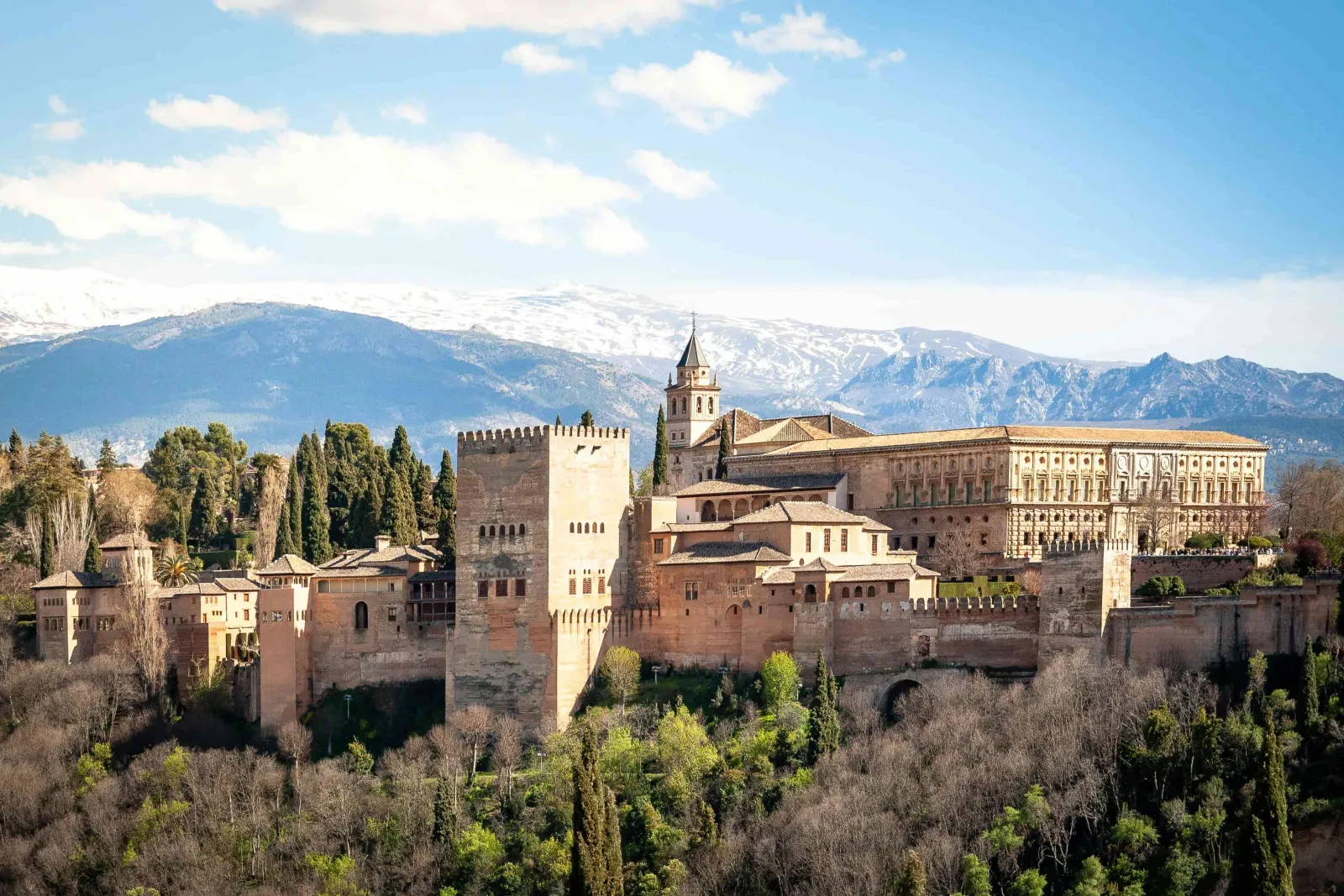
Spain's cheapest city to live in, free tapas, the Alhambra and skiing 45 minutes away. Small job market, big lifestyle.
Cheapest of the fiveFree tapasSki + sunStudent city
New-teacher pay
€1,000–1,300
a month
Room, centre
€300–350
Spain's cheapest
Sunshine
2,917h
a year
Sierra Nevada
~45 min
ski from the city
Hiring peaks
Sep & Jan
main intakes
Granada gives you a lot of life for very little money, and that's the whole pitch. You can rent a room for around €300, eat dinner off free tapas, ski the Sierra Nevada in the morning and be back for sunset over the Alhambra. What you won't get is a big salary or a deep job market. Come for the lifestyle and the language rather than the pay packet, and Granada delivers like nowhere else.
This is the smallest of the five markets, so competition for the better contracts is real and being on the ground matters. The work is there, but you'll hustle for it:
Language academies running late-afternoon and evening classes for kids and teens.
Private tutoring, helped along by the University of Granada's huge student population.
Exam prep (Cambridge, Trinity) and some in-company and business English.
Online teaching to fill the gaps, which is common here given the smaller market.
There's no big job board that beats turning up in September with a CV, a Spanish phone number and a willingness to knock on doors. Hiring peaks late August–September, with a smaller wave in January.
Most teachers stitch together an academy contract and private students.
Many academy roles are part-time and hourly. Full-time contracts include social security and paid holidays; tutoring and in-company work is usually done as autónomo.
What you'll earn
Be straight with yourself: this is the lowest-paying of the five cities, but also the cheapest to live in. A new academy teacher earns €1,000–1,300 a month. Rough going rates:
Language academy (per hour)
€15–20
Private one-to-one (per hour)
€15–25
Group / exam prep (per hour)
€30–50
Online teaching (per hour)
€6–15
Typical monthly take, new teacher~€1,000–1,300
The low cost of living is what makes that work. Private teaching is generally exempt from VAT (IVA), and new freelancers get the ~€80/month "tarifa plana", which Andalusia's "cuota cero" can refund for your first year. Line up private students early, the student population makes them easy to find.
Cost of living
Granada is genuinely the most affordable of the big cities. A realistic monthly budget sharing a flat:
Room in a shared central flat
€330
Transport (monthly bus/metro pass)
~€25
Groceries
~€220
Eating out & social
~€120
Utilities (your share)
~€50
Phone & internet (share)
~€25
Health insurance
~€70
Comfortable monthly total~€840
The famous free-tapas tradition quietly saves you money, a couple of drinks can stand in for dinner. Your rent is roughly half what you'd pay in Madrid or Barcelona. (Indicative 2026 estimates; rents vary by area and timing.)
Where to live
Realejo
Bohemian
The old Jewish quarter: tapas bars, street art, central and lively. A teacher favourite.
Rooms from ~€320–450
Albaicín
Historic
The UNESCO Moorish quarter, whitewashed lanes and Alhambra views. Gorgeous but hilly and bus-poor.
Rooms from ~€350–475
Centro
Convenient
The commercial heart around the cathedral and Gran Vía. Everything on the doorstep, busier and pricier.
Rooms from ~€350–475
Zaidín
Best value
A big residential area south of the river, tram-served, modern and cheaper.
Rooms from ~€250–350
Beiro
Student
The university district, lively day and night, and very affordable.
Rooms from ~€250–350
La Chana
Local
Residential, well-priced and community-feeling, a little further out.
Rooms from ~€250–320
How to actually find a flat
Use Idealista and Fotocasa, plus Spotahome, Badi and the student-housing portals.
Being in Granada to search beats applying from abroad, and English-language listings can be inflated by up to 50%.
Never pay before viewing and verifying the landlord. The market moves fast around the September term.
Your first two weeks
1
Empadronamiento
Register your address at the Ayuntamiento once you have a lease. Needed for the TIE and most services.
2
NIE / TIE
Your foreigner ID number and card. Apply for the TIE if you're staying over six months.
3
Open a bank account
Digital banks (N26, Revolut) open in minutes; traditional banks want your NIE/TIE and padrón.
4
Get a Spanish SIM
A plan with plenty of data runs ~€11–15/month. Bring your passport.
5
Transport card
Grab a Credibús card for the bus or a Consorcio card for the tram; monthly passes run ~€20–25.
6
Health cover
EU citizens use the EHIC/GHIC; non-EU teachers need a no-copay private policy for the visa.
Visa & legal
EU or EEA citizens can step straight into this market. For everyone else, 2025 made things harder, and Granada has the same regional catch as Seville:
Heads up: Andalusia suppressed its conversation-assistant (auxiliar) programme in public schools for 2025–26 after a labour-inspectorate sanction, and the region is absent from the national 2026–27 cycle. So the assistant route may not be available in Granada right now, and you could be placed in another region instead. Check the Junta de Andalucía for any restart.
That leaves these routes for non-EU teachers:
Student visa via a course at an Instituto Cervantes-accredited centre, applied for from your home country, showing ~€600/month in funds, and it can carry work rights of up to 30 hours a week (confirm for your case).
Working holiday visa for Australians, Kiwis (18–30) and Canadians (18–35). Not open to the UK or US.
UK teachers can apply via the British Council assistant programme (which may place you outside Andalusia).
The rules genuinely changed in 2025, so the full picture lives in the complete guide, or run the free check for your exact route.
Life in Granada
Life here is the reason to come. Nearly 3,000 hours of sun, the Sierra Nevada close enough to ski in the morning and be back for tapas by night, and the free-tapas tradition that's largely died out elsewhere in Spain. Sitting at ~700m, winters are crisp (and the skiing real) while summers are hot and dry.
Culture: the Alhambra, flamenco in the Sacromonte caves, and a famously bohemian, student energy.
Festivals: Día de la Cruz in May, Corpus and the Feria de Granada, and the summer music-and-dance festival in the Alhambra.
The language: Spanish only, with a fast Andalusian accent and less English spoken than the big cities, so basic Spanish really helps.
Get qualified
For most Granada academy jobs an accredited 120-hour TEFL with teaching practice gets your CV read, and a CELTA or Trinity CertTESOL carries more weight for exam classes. Be careful with adverts promising a "CELTA in Granada", the established in-person centres are in cities like Barcelona, so verify any local course directly with Cambridge or Trinity before paying. The simplest path is to train with us in Barcelona and bring the certificate, and the contacts, south. More in the complete guide.
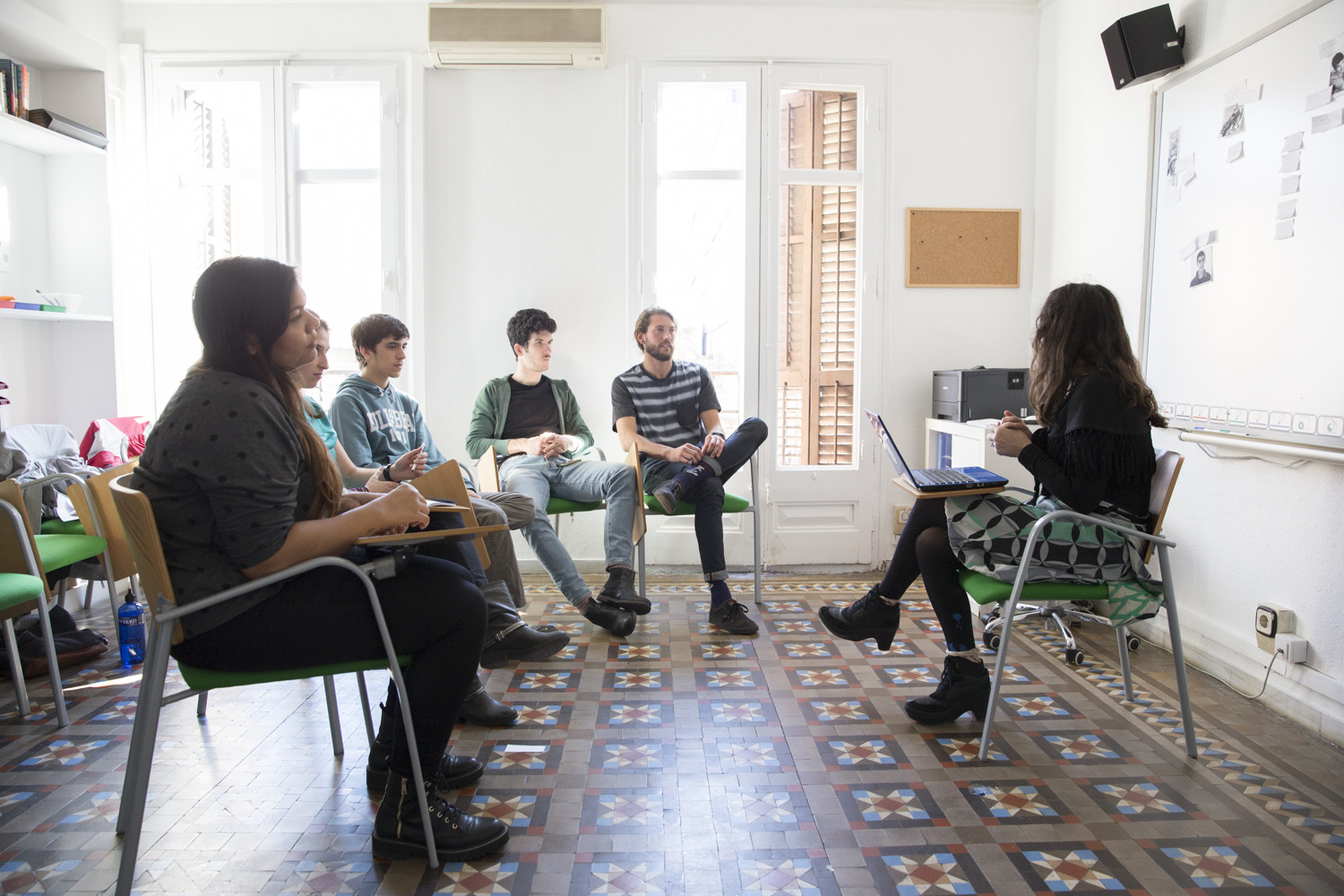
Putting in the hours on the course.
Granada vs the other cities
Granada wins on cost and charm and loses on jobs and pay. Madrid and Barcelona have far more work and higher salaries, though rent eats the difference. Valencia is the balance many teachers choose, with a beach. Seville offers the same Andalusian warmth with a bigger market. Choose Granada if you want the lowest costs, the mountains and the tapas, and you accept you'll hustle harder for hours and earn less.
Frequently asked questions
Can I teach in Granada without a degree?
Often yes at private academies with a 120-hour TEFL. A degree is needed for assistant programmes and international schools.
Is the auxiliar programme available in Granada?
Not in Andalusia's public schools for 2025–26, and the region is absent from the 2026–27 national cycle. You may be placed elsewhere in Spain.
How much will I earn?
Around €1,000–1,300 a month at an academy, plus €15–25/hour tutoring. Low pay, but the cheapest city in Spain to live in.
Can I live on that?
Yes, modestly, because Granada is so cheap. Saving much is harder without private classes on top.
Do I need to speak Spanish?
Not to teach, but daily life is much easier with basic Spanish, less English is spoken here than in the big cities.
When's the best time to arrive?
Late August / September for the main hiring wave, with a smaller one in January. Search for a flat in person.
Start here
Granada is for anyone who'd take mountains, tapas and sunshine over a bigger pay cheque. Take the free eligibility check, get qualified, and we'll help you land the job. The life you keep scrolling past is closer than you think.
We use cookies to see how the site is used and make it better. You can accept analytics cookies, or carry on with just the essential ones. See our Cookie Policy.