Sunshine, flamenco and some of Spain's lowest living costs. Modest pay, but a beautiful, slow Andalusian life.
Low cost of living~2,900h of sunAndalusian charmSpanish only
New-teacher pay
€1,000–1,400
gross a month
Room, centre
€300–450
shared flat / mo
Sunshine
~2,900h
a year
Summer highs
36°C+
Europe's hottest city
Hiring peaks
Sep & Jan
main intakes
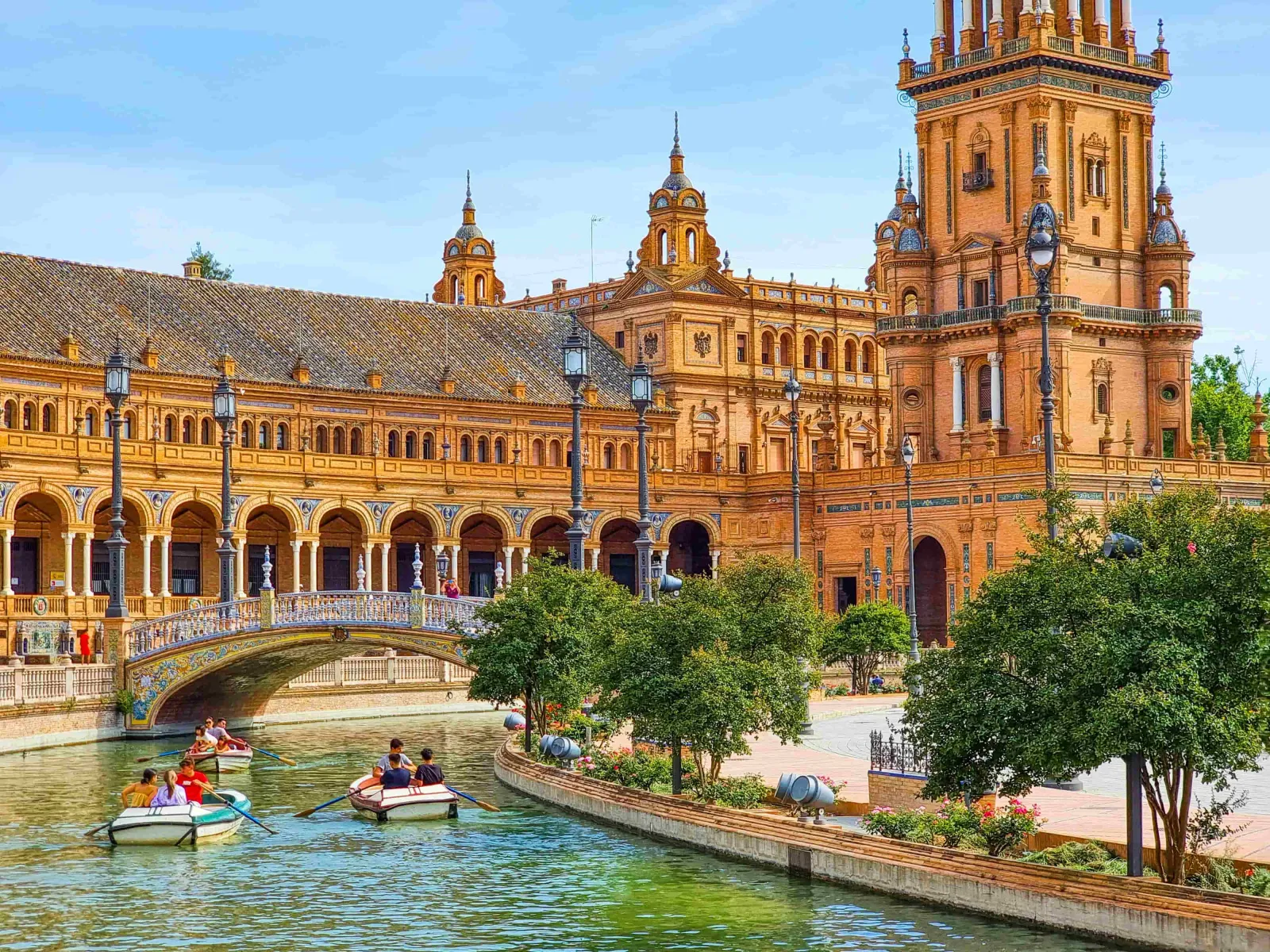
Seville trades salary for sunshine. It's one of Spain's most liveable and lowest-cost cities: flamenco, orange trees, free tapas and a slow, evening-centred rhythm. The pay is honestly the weak spot, but rents are low to match, so you live well and save a little. If lifestyle-per-euro matters more than your bank balance, Seville is hard to beat.
It's a steady, school-year market built mainly on private academies, smaller than Madrid or Barcelona. Most teachers combine a few sources:
Language academies teaching kids, teens and adults, after-school and evenings.
In-company and business English, smaller than in Madrid but the best-paid hours.
Private one-to-one students at €15–25 an hour.
Exam prep (Cambridge, Trinity), summer camps and online to fill gaps.
The two biggest names for both jobs and training are CLIC International House and Teaching House, both in the centre. The most reliable way in is the local way: list the academies, email your CV in August, then follow up in person. Hiring peaks late August–September, with a smaller wave in January.
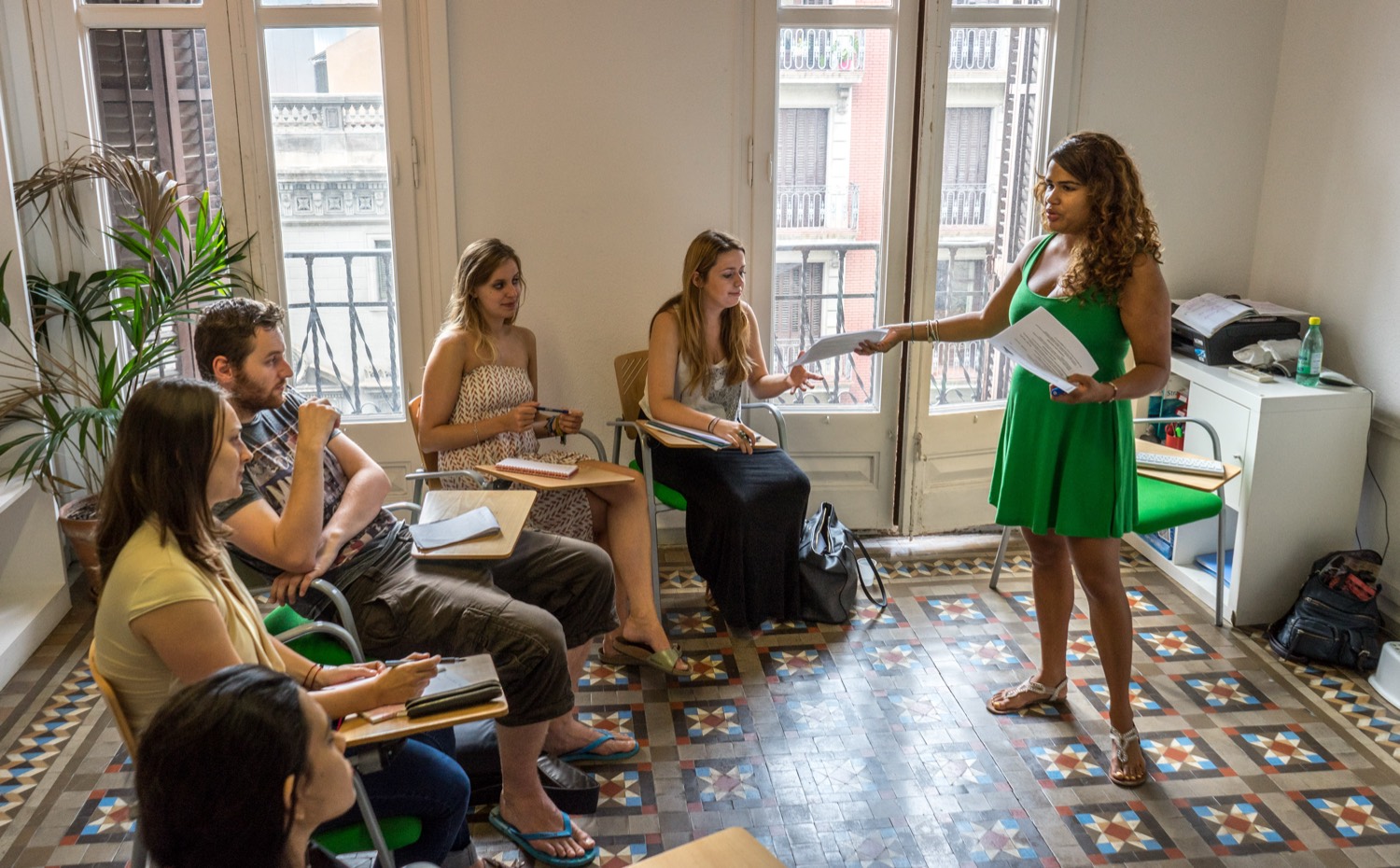
Private academies are the backbone of the market.
Contracted academy roles come with Spanish employment rights (social security, paid leave, public healthcare). A lot of private and in-company work is done as autónomo (self-employed).
What you'll earn
Be straight with yourself: this is a low-pay city. A new academy teacher earns €1,000–1,400 a month gross (about €1,000–1,300 in the hand). Rough going rates:
Language academy (per hour)
€10–20
Private one-to-one (per hour)
€15–25
In-company / business (per hour)
€30–50
Online teaching (per hour)
€6–15
Typical monthly take, new teacher~€1,000–1,300
The saving grace is how far it stretches: low rents mean you live comfortably even on this. Private teaching is generally exempt from VAT (IVA), and new freelancers get the ~€80/month "tarifa plana", which Andalusia's "cuota cero" can refund for your first year. Build private classes and a specialism (business or exam prep) to push past the base.
Cost of living
This is why teachers put up with the pay. Seville is one of Spain's cheaper big cities. A realistic monthly budget sharing a flat:
Room in a shared central flat
€400
Transport (TUSSAM 30-day card)
€21
Groceries
~€225
Eating out & social
~€150
Utilities (your share)
~€50
Phone
~€20
Health insurance
~€60
Comfortable monthly total~€950
Rooms start near €285 and a single trip on a topped-up TUSSAM card is well under fifty cents. Only Granada is cheaper among the big cities. (Indicative 2026 estimates; rents vary by area and timing.)
Where to live
Triana
Soulful
Across the river, the flamenco heart with a real neighbourhood feel. Increasingly popular.
Rooms from ~€350–500
Alameda de Hércules
Bohemian
The hippest corner of the old town: nightlife, a young crowd and the LGBTQ+ scene.
Rooms from ~€350–500
La Macarena
Best value
Traditional, near the universities, and the lowest central rents. Great for immersion.
Rooms from ~€300–420
El Arenal / Alfalfa
Central
Walk-everywhere old-town pockets, more tourist-adjacent and a little pricier.
Rooms from ~€400–550
Nervión
Practical
Modern, residential and well-connected, good value for space outside the core.
Rooms from ~€350–475
Los Remedios
Residential
Upmarket and quiet, home to the Feria fairground. Suits calmer living.
Rooms from ~€380–520
How to actually find a flat
Use Idealista and Fotocasa, plus HousingAnywhere or Spotahome if you're booking from abroad.
Search in June or July, the good rooms vanish before the university term starts.
Never pay before viewing in person or by verified video. Wire-the-deposit-first listings are scams.
Your first two weeks
1
Empadronamiento
Register your address at the Ayuntamiento once you have a lease. Needed before the TIE and most services.
2
NIE / TIE
Your foreigner ID number and card. Apply for the TIE within 30 days if you're staying over six months.
3
Open a bank account
Bring an address and your NIE. Check fees, some banks charge monthly unless conditions are met.
4
Get a Spanish SIM
A data plan runs ~€20/month. Bring your passport.
5
Transport card
Pick up a rechargeable TUSSAM card (€1.50 deposit), or the €21.20 30-day card if you commute daily.
6
Health cover
EU citizens use the EHIC/GHIC; non-EU teachers need a no-copay private policy for the visa.
Visa & legal
EU or EEA citizens can live and work in Seville with no visa. For everyone else, 2025 made things harder, and there's one Seville-specific catch:
Heads up: Andalusia suppressed its ~1,800 language-assistant (auxiliar) posts for 2025–26 after a labour-inspectorate dispute, and wasn't on the national 2026–27 list either. So unlike Madrid or Valencia, the auxiliar route is not currently a reliable way into Seville. Check the Junta de Andalucía for any restart before counting on it.
That leaves two main routes for non-EU teachers:
Student visa via a course at an Instituto Cervantes-accredited centre, applied for from your home country, showing ~€600/month in funds. Since the reform it can carry work rights of up to 30 hours a week (confirm the detail for your case).
Working holiday visa for Australians, Kiwis (18–30) and Canadians (18–35). Not open to the UK or US.
UK teachers can still apply via the British Council assistant programme (plan ahead, the window is early in the year).
The visa rules genuinely changed in 2025, so we keep the full current picture in the complete guide, or run the free check for your exact route.
Life in Seville
Seville is a joy for most of the year and brutal for part of it. It's the hottest major city in continental Europe: July and August highs sit around 36°C and heatwaves push past 42°C, so summer life shifts to early mornings and late nights. The rest of the year is glorious, close to 3,000 hours of sun, with the famous free-tapas tradition and flamenco in Triana.
Festivals: Semana Santa (late March / early April) and the Feria de Abril are two of Spain's greatest spectacles, both pure chaos for the rental market.
Day trips: Cádiz, Córdoba, Jerez, Granada and the Costa de la Luz beaches, with AVE trains to Madrid.
The language: Spanish only (no co-official language), though the Andalusian accent drops consonants and takes some adjusting to.
Get qualified
For academy work the baseline is a 120-hour certificate with observed teaching practice, and a CELTA or Trinity CertTESOL opens the best doors. You can train in Seville itself, and our own Trinity CertTESOL runs in Seville and Barcelona, often bundled with a course package that helps non-EU teachers onto a student visa. You don't need to be a native speaker or a graduate for most academy roles. More in the complete guide.
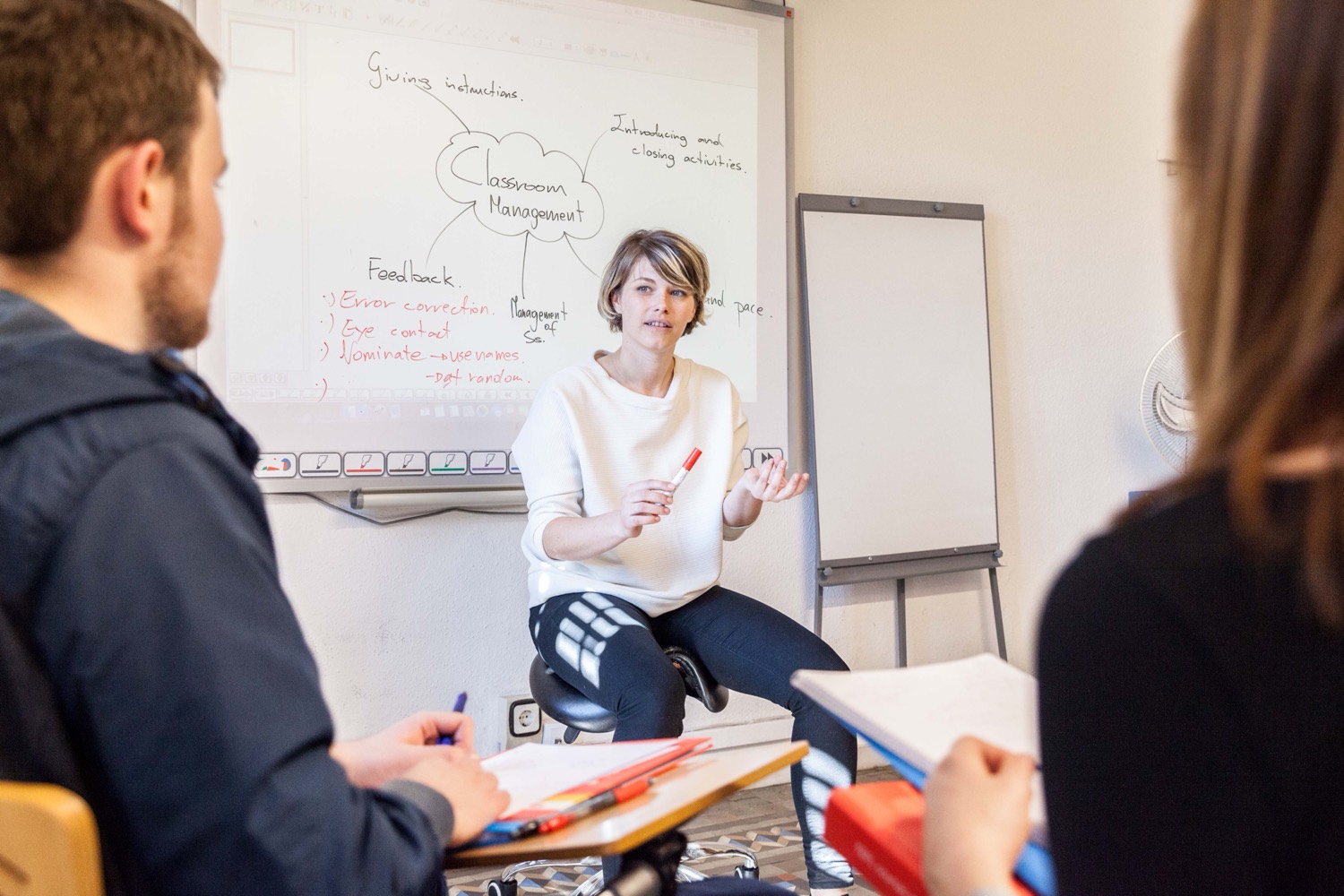
Teaching practice with real students.
Seville vs the other cities
If your goal is to earn and save, Madrid and Barcelona pay more and have more jobs, but their rents eat the difference. Valencia is the value-and-lifestyle sweet spot with a beach. Seville trades salary for cheap living, sunshine and a slow Andalusian pace, with the trade-offs of a smaller market and ferocious summers. Granada is cheaper still but smaller. A quiet plus of Seville: no co-official language, so all your effort goes into Spanish.
Frequently asked questions
Can I teach in Seville without a degree?
Often yes at private academies with a 120-hour TEFL and teaching practice. A degree is needed for assistant programmes and international schools.
Can Americans teach in Seville right now?
It's harder than it was: the US has no working-holiday agreement and the Andalusia auxiliar programme is suspended, so the main route is a student visa (with up to 30 hours of work rights).
How much will I earn?
Around €1,000–1,400 a month gross in an academy, plus private classes at €15–25 an hour. Low pay, but low costs to match.
Is Seville too hot?
Summers are extreme, regularly above 36°C and sometimes over 42°C, so many teachers treat July and August as downtime or travel.
Do I need to speak Spanish?
Not to teach, classes are in English. But you'll want it for daily life, and the Andalusian accent takes some getting used to.
When's the best time to arrive?
July to early September for the main hiring wave, with a smaller intake in January. Search for a flat in June or July.
Start here
Seville rewards anyone who values life over salary. Take the free eligibility check, get qualified, and we'll help you land the job. The life you keep scrolling past is closer than you think.
We use cookies to see how the site is used and make it better. You can accept analytics cookies, or carry on with just the essential ones. See our Cookie Policy.